Fix Your Sleep Architecture After 50: How Deep Sleep Powers Your Cellular Energy
Published: 9/27/2026

Linda, a 58-year-old office manager, was spending eight hours in bed every night and still waking up foggy and drained. Her sleep time looked fine on paper. When she began dimming the lights an hour before bed, eating dinner earlier and keeping a steady wake-up time, she noticed she felt more rested within a few weeks. Her experience is one example, not a guarantee, but it points to something important: how you sleep can matter as much as how long.
If you wake up tired even after a full night in bed, the problem may not be how long you sleep — it may be how well your sleep is structured. After 50, the natural pattern of your sleep stages begins to shift, and that shift can affect everything from your morning energy to how your cells recover overnight.
The good news: everyday habits can support better sleep structure at any age. Here is what is happening while you sleep, and what you can do about it.
The Mitochondrial Connection
Inside nearly every cell in your body are tiny structures called mitochondria. They are often called the "powerhouses" of the cell because they produce ATP — the molecule your body uses as energy for everything from moving muscles to thinking clearly.
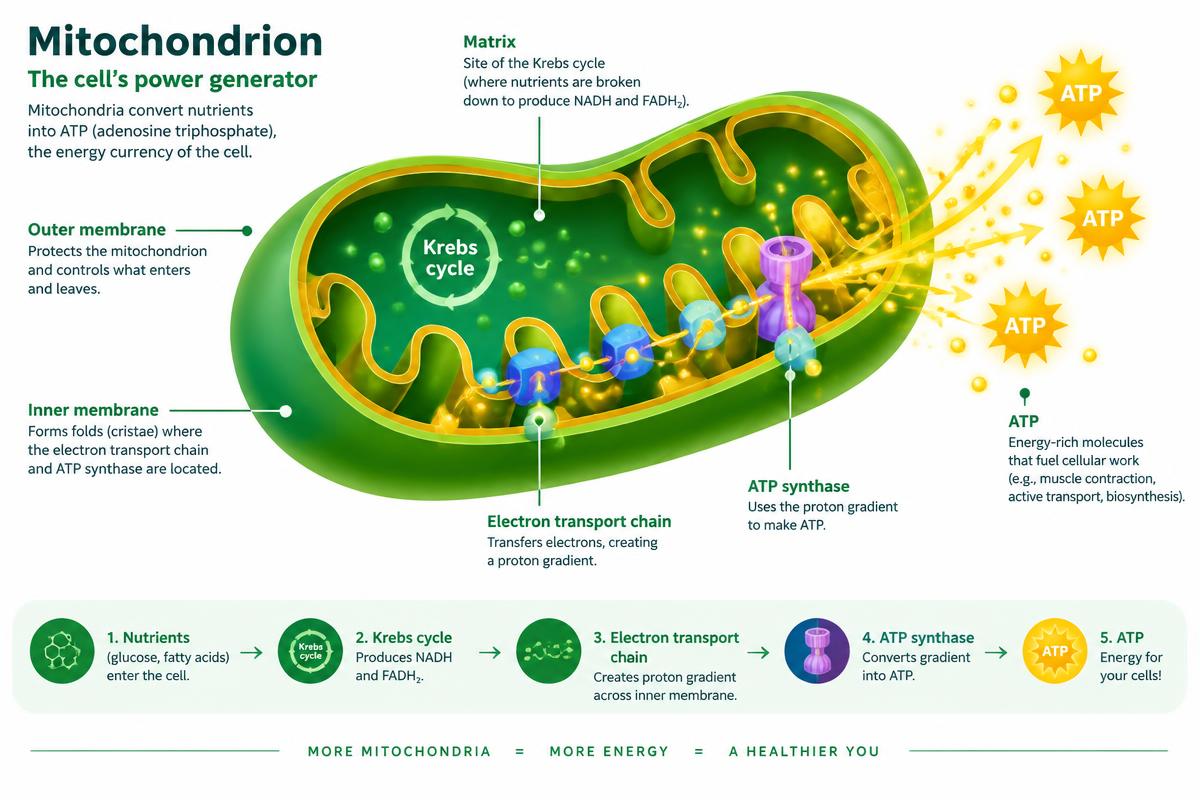
Deep sleep is when much of your body's repair and recovery work happens. During the deepest stages of sleep, your brain clears metabolic waste, your body releases growth hormone for tissue repair, and your cells get the downtime they need to restore their energy-producing systems.
When deep sleep is cut short — which becomes more common with age — you may feel it the next day as fatigue, foggy thinking, or low motivation, even if you spent enough hours in bed.
What Is Sleep Architecture?
"Sleep architecture" is simply the pattern of sleep stages you cycle through each night. A healthy night includes four to six cycles of about 90 minutes each, moving through:
- Light sleep (stages N1 and N2): you drift off, your heart rate and breathing slow, and your body relaxes. This makes up roughly half of a healthy night.
- Deep sleep (stage N3): the most physically restorative stage. Your body heals, builds muscle, and supports immune function. Most deep sleep happens in the first half of the night.
- REM sleep (stage R): when your brain processes memories and emotions. Most REM happens in the second half of the night.
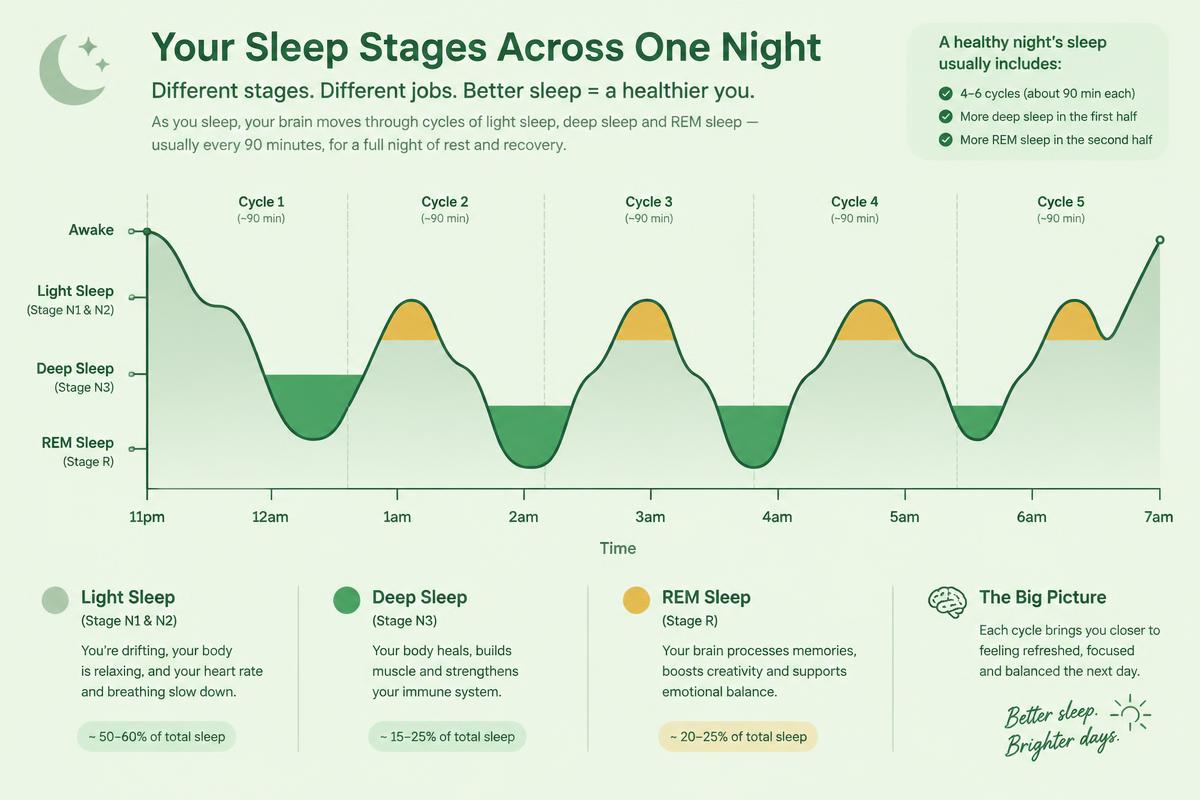
After 50, two changes are common: deep sleep tends to become shorter and more easily interrupted, and waking during the night becomes more frequent. That is why protecting the first half of your night matters so much.
How to Support Better Sleep Architecture
You cannot force deep sleep, but you can create the conditions that make it more likely. These habits are consistently recommended by sleep researchers and public health agencies:
1. Keep a consistent schedule
Going to bed and waking up at the same time every day — including weekends — helps anchor your body clock, so deep sleep arrives more predictably in the first part of the night.
2. Get morning light
Bright natural light in the first hour after waking is one of the strongest signals for setting your internal clock. Even 10 to 15 minutes outside helps.
3. Move during the day
Regular physical activity is linked to better sleep quality. Moderate "Zone 2" movement — a pace where you can still hold a conversation, like a brisk walk — is a sustainable option for most adults over 50.

4. Cool, dark, and quiet
A slightly cool bedroom (around 65°F / 18°C), blackout curtains or an eye mask, and reducing noise all support uninterrupted deep sleep.
5. Watch the evening habits
Caffeine after mid-afternoon, alcohol close to bedtime, heavy late meals, and bright screens in the last hour before bed can all fragment your sleep stages — even if you still fall asleep quickly.
Taking the Next Step
Better sleep after 50 is less about chasing a perfect night and more about consistent, simple habits: a steady schedule, morning light, daily movement, and a bedroom set up for rest. Small changes, repeated, are what rebuild healthy sleep architecture over time.
If loud snoring, long pauses in breathing, or severe daytime sleepiness are part of your picture, bring it up with your doctor — those can be signs of a treatable sleep condition.
Want a simple starting point? Our free Healthy Aging Guide walks you through the daily habits that support energy, sleep, and healthy aging after 50. Enter your email below and we will send it straight to your inbox.
Sources and Further Reading
- Getting a Good Night's Sleep — National Institute on Aging
- Physical Activity for Older Adults — Centers for Disease Control and Prevention
- Healthy Eating as You Age — National Institute on Aging
Get the Free Healthy Aging Guide
Inside the free guide, you'll find the top protein sources for keeping your muscles strong as you age, simple meal-timing strategies for steady all-day energy, everyday foods that help your body fight inflammation naturally, and the #1 supplement mistake adults over 60 make — all explained in plain language you can put to use this week.
Get the Free Healthy Aging GuideSent straight to your inbox — free, no spam, unsubscribe anytime.
Medical disclaimer: DrAIFIT provides general educational information and is not a medical service. This content does not diagnose, treat, cure, or prevent disease. Speak with a qualified healthcare professional before changing your diet, exercise, supplements, or medications, especially if you have a medical condition or take prescription medication.