Top 5 Expert Approved ways to rebuild your core and prevent falls after 60

Take the case of Charles, a 71-year-old retired pilot. Charles was walking out to his garden when his toe clipped an uneven paving stone. He stumbled forward, but instead of catching himself, his torso simply collapsed, and he fell hard onto the grass. Luckily, he only suffered a bruised ego.
When Charles asked his doctor why his legs gave out so easily, the doctor corrected him: his legs were fine. The problem was his core. Charles’s midsection had become so weak that the moment his center of gravity shifted, his body didn't have the internal tension to snap him back upright. Charles stopped doing dangerous, old-school sit-ups and started doing gentle, functional core-bracing exercises in his living room. Within six weeks, he found himself walking taller, feeling incredibly stable, and navigating uneven ground without a hint of fear.
Most adults over 60 think "core strength" is about getting a six-pack. In reality, your core is a biological safety cylinder. It wraps around your spine and acts as the master control center for your balance.
If you want to stay on your feet and protect your independence, here are the top 5 ways to rebuild your core and prevent falls after 60.
1. Stop Doing Traditional Sit-Ups Immediately
If you want to protect your spine, you must abandon the sit-up. Traditional crunches violently flex the lumbar spine, actively pushing the fluid inside your spinal discs backward, which is the leading cause of herniated discs. Furthermore, sit-ups only train the superficial front muscles. To prevent falls, you need to train the deep, stabilizing muscles that wrap completely around your midsection—not just the ones on the front.
2. Master the "Stomach Vacuum" (Transverse Abdominis)
Your most important core muscle is the transverse abdominis. It acts like a built-in weightlifting belt, pulling everything in tight and stabilizing your spine. You can train it while sitting in a chair or lying in bed. Simply take a deep breath in, and as you exhale, pull your belly button as far back toward your spine as possible. Hold that tight, braced position for 10 seconds while breathing shallowly, then release. Doing this 10 times a day completely reactivates your body's internal safety belt.
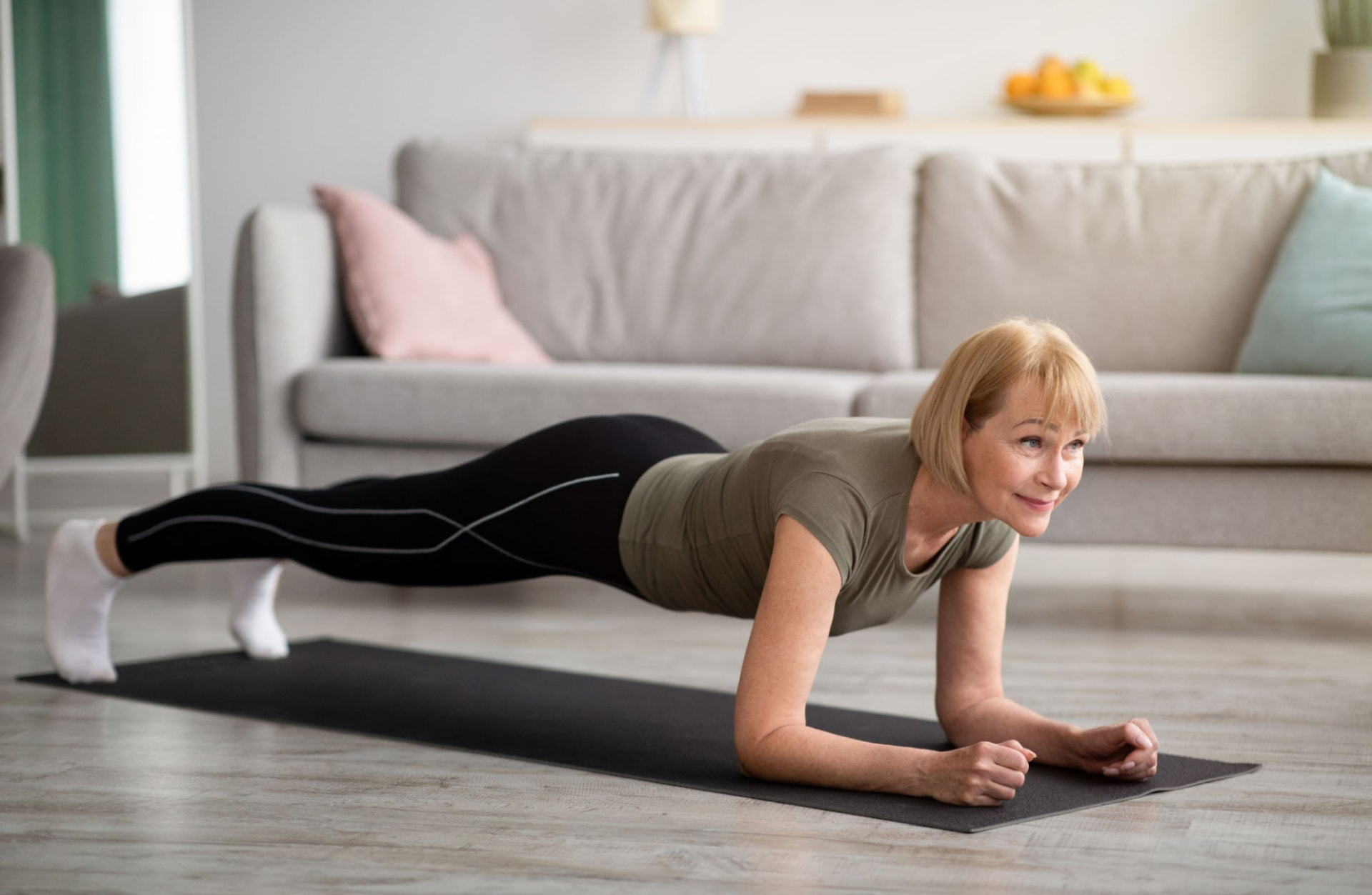
3. Practice the "Bird-Dog" for Lower Back Balance
A weak lower back is a primary culprit in falls. To safely strengthen it, get on your hands and knees on a soft mat (keep your wrists directly under your shoulders). Slowly extend your right arm straight forward while simultaneously extending your left leg straight backward. Hold this position for 5 seconds—focusing on keeping your back perfectly flat like a table—then slowly lower them and switch sides. This forces the small muscles along your spine to fire and adapt to sudden shifts in gravity.
4. The Kitchen Counter Single-Leg Stand
Balance is a "use it or lose it" skill. The best way to train your core to catch you during a stumble is to safely practice being off-balance. Stand facing your kitchen counter, resting your hands lightly on the edge. Lift one foot off the ground. Now, try to let go of the counter for 10 seconds. Your ankles will wobble, and your core will immediately fire up to keep you upright. As you get stronger, try to hold it for 30 seconds on each leg.
5. Heal Lower Back Soreness with Light Therapy
The biggest reason older adults stop doing core exercises is that their lower back muscles become stiff and sore the next day. To stay consistent, you have to support your cellular recovery. This is why many active seniors use FDA-cleared tools like reVive Light Therapy on their lower back after exercising. The near-infrared wavelengths penetrate deep into the spinal muscles, creating a surge of localized blood flow that flushes out lactic acid. By quickly soothing the soreness, you can get back to building your strength without missing a beat.
Affiliate link: DrAIFIT may earn a commission if you buy, at no extra cost to you. Disclosure
The Cost of a Weak Core
To understand exactly why Charles fell in his garden, you have to look at the direct biological correlation between core strength and balance capability as we age.
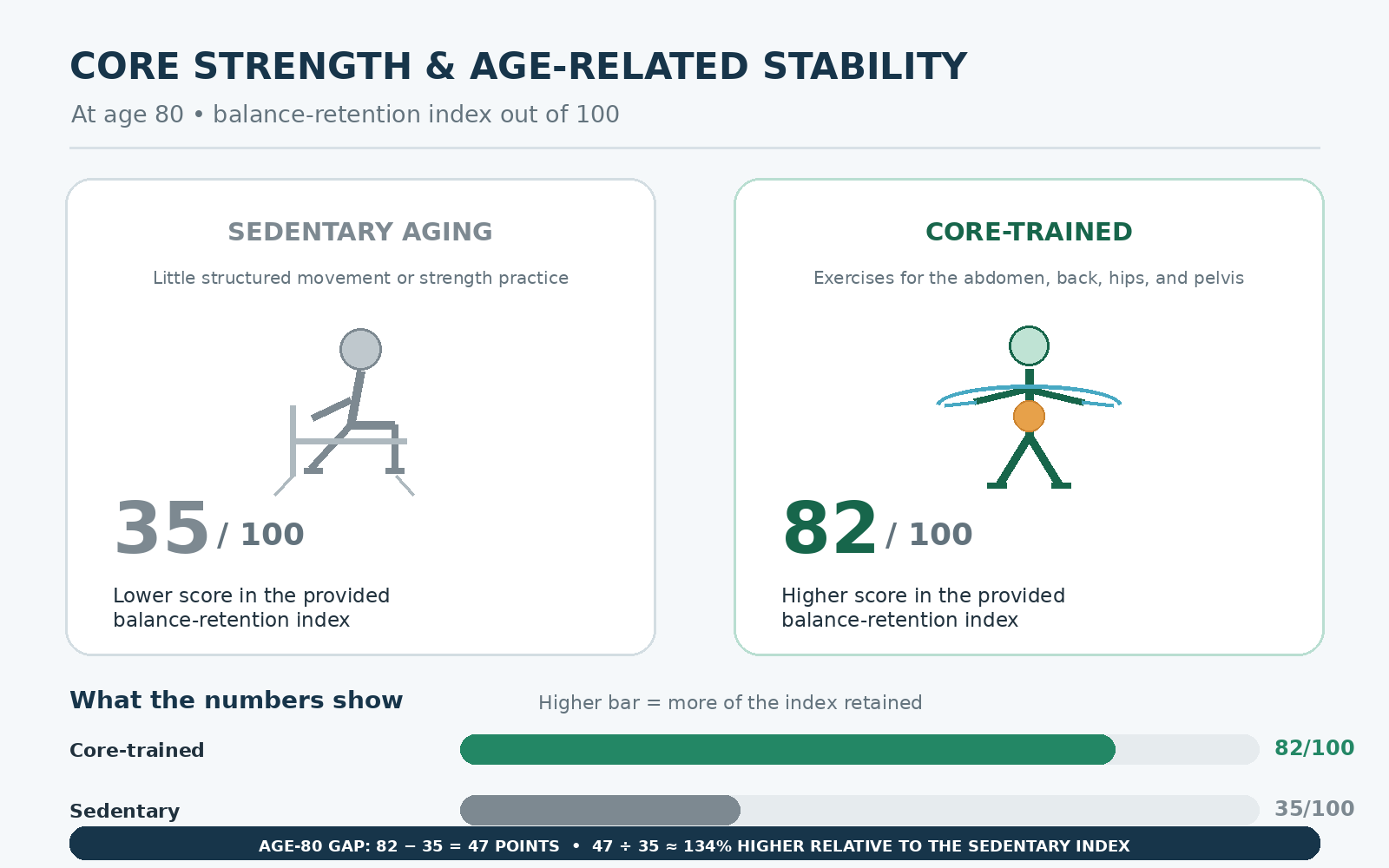
The data is clear: falling is not an inevitable part of getting older. It is the direct result of letting your core muscles weaken, and it is entirely reversible.
Key takeaway for DrAIFIT readers
You do not have to live in fear of a sudden stumble. By abandoning dangerous sit-ups and focusing on deep, stabilizing movements, you can rebuild the biological safety cylinder that keeps you upright and independent.
Of course, your body cannot rebuild these vital core muscles if it doesn't have the right fuel. If you are doing the work to stay balanced but under-eating amino acids, your muscles simply won't grow. To ensure you are giving your core the exact raw materials it needs to protect you, download our Free Ultimate Protein Guide for Adults Over 50.
(End of Article)
Medical disclaimer: DrAIFIT provides general educational information and is not a medical service. This content does not diagnose, treat, cure, or prevent disease. Speak with a qualified healthcare professional before changing your diet, exercise, supplements, or medications, especially if you have a medical condition or take prescription medication.
Get the Free Healthy Aging Guide
Inside the free guide, you'll find the top protein sources for keeping your muscles strong as you age, simple meal-timing strategies for steady all-day energy, everyday foods that help your body fight inflammation naturally, and the #1 supplement mistake adults over 60 make — all explained in plain language you can put to use this week.
Get the Free Healthy Aging GuideSent straight to your inbox — free, no spam, unsubscribe anytime.