The “80% Processed Meat” Colon-Cancer Claim: What Adults 30+—Especially Over 60—Should Know
A recent viral article claims that an oncologist noticed sausages, hot dogs, or smoked meats in 80% of the colon-cancer patients he treated.
That statement is attention-grabbing, but it should not be treated as a scientific finding. It is an anecdotal observation, not a controlled study. It does not tell us how many people were evaluated, what other foods they ate, whether they had other risk factors, or whether processed meat caused their cancer.
However, the underlying subject is important. Research does show that regularly eating processed meat is associated with a higher risk of colorectal cancer.
What counts as processed meat?
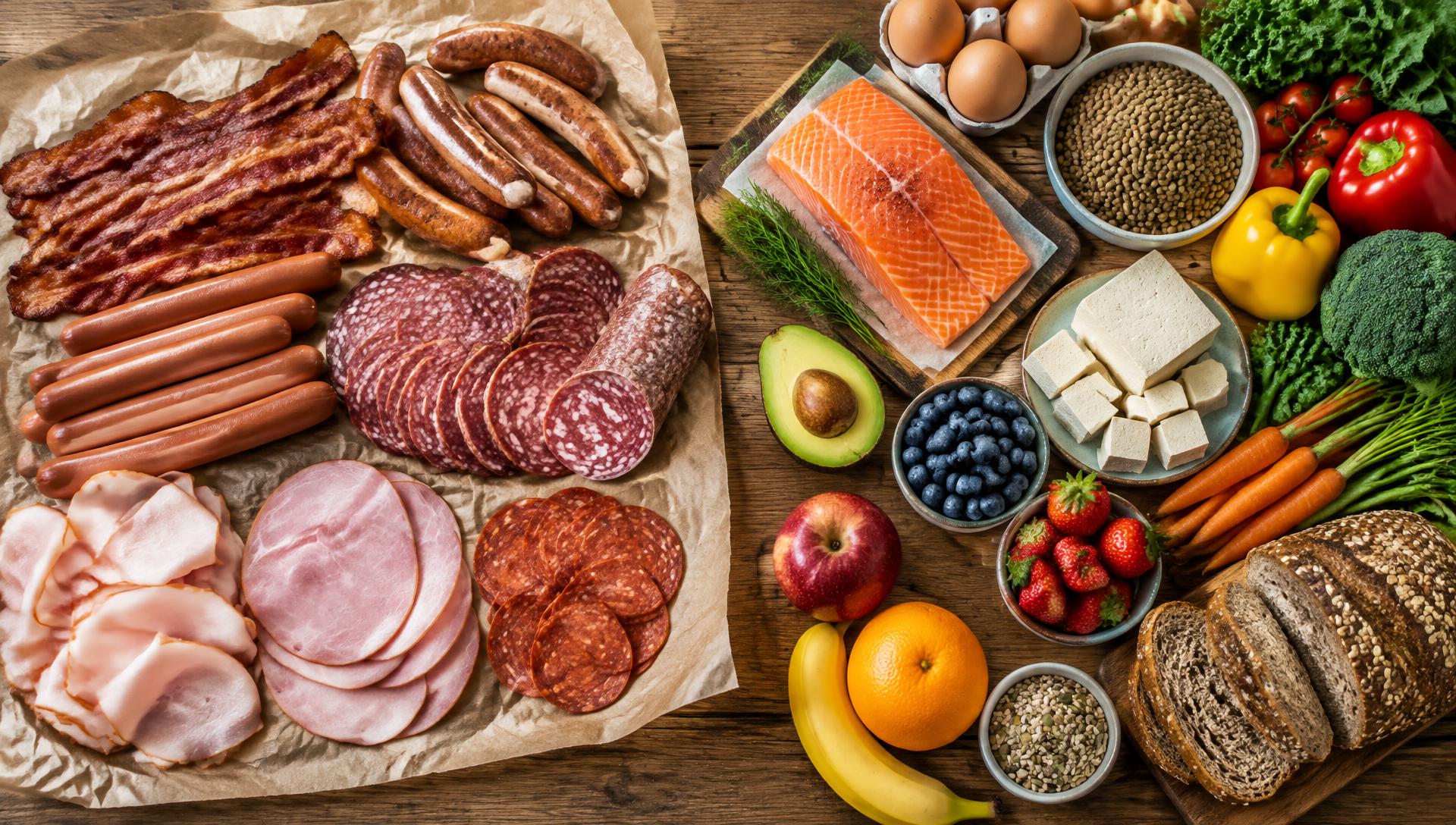
Processed meat includes meat preserved or changed through smoking, curing, salting, fermentation, or chemical preservatives. Examples include:
- Bacon
- Sausage
- Hot dogs
- Ham
- Salami
- Deli meats
- Some smoked or cured meats
The International Agency for Research on Cancer classifies processed meat as carcinogenic to humans based on evidence linking it to colorectal cancer. This classification describes the strength of the evidence; it does not mean processed meat creates the same level of risk as tobacco.
IARC reports that eating approximately 50 grams of processed meat daily was associated with a relative increase in colorectal-cancer risk of less than 20%. This is a population-level estimate—not a prediction that any one person will develop cancer.
Read the IARC explanation of processed meat and colorectal cancer
Red meat is not the same as processed meat
Processed meat and red meat are often discussed together, but they are not identical.
Red meat includes beef, pork, lamb, and similar meats that have not been preserved through smoking, curing, or chemical processing. Your overall dietary pattern matters, and you do not necessarily need to eliminate every animal food to eat more healthfully.
A practical approach is to make processed meat occasional rather than a daily habit and include more beans, lentils, vegetables, fruit, whole grains, fish, eggs, poultry, nuts, and seeds.
Simple food swaps
Small changes are often easier to maintain than extreme rules.
Try replacing:
- Bacon with eggs, oatmeal, or beans
- Sausage with grilled fish, chicken, tofu, or lentils
- Deli-meat sandwiches with tuna, egg, hummus, or bean salad
- Hot dogs with a bean-based meal or a vegetable-and-protein plate
If you increase fiber, do it gradually and drink enough fluids. Adults with digestive conditions or significant changes in bowel habits should ask a healthcare professional before making major dietary changes.
For more practical guidance, read DrAIFIT’s Protein, Fiber, and Hydration Guide.
Symptoms should not be ignored
Colorectal polyps and cancer do not always cause symptoms. When symptoms do occur, they may include:
- Blood in or on the stool
- A persistent change in bowel habits
- Diarrhea or constipation
- A feeling that the bowel does not empty completely
- Ongoing abdominal pain, cramps, or discomfort
- Unexplained weight loss
- Iron-deficiency anemia or unusual fatigue
These symptoms can have causes other than cancer, but they still deserve medical evaluation. Do not wait for pain before contacting a healthcare professional.
See the CDC’s colorectal-cancer symptoms guide
Screening is one of the most important steps
Because colorectal cancer can develop without obvious symptoms, screening matters even when you feel well.
In the United States, the CDC recommends that adults begin colorectal-cancer screening at age 45. Routine screening is generally recommended through age 75. For adults ages 76–85, the decision should be individualized with a healthcare professional.
People with a close family history of colorectal cancer, previous polyps, inflammatory bowel disease, or certain inherited conditions may need screening earlier or more often.
Ask your healthcare professional:
- Am I current with colorectal-cancer screening?
- Which screening option is appropriate for me?
- Does my family history change my schedule?
- Do any of my medications or health conditions affect the decision?

A practical seven-day action plan
This week, consider:
- Checking when you last completed colorectal-cancer screening.
- Writing down how often you eat bacon, sausage, hot dogs, ham, or deli meat.
- Replacing two processed-meat meals with beans, fish, eggs, poultry, or tofu.
- Adding one vegetable, fruit, or whole-grain food to a daily meal.
- Taking regular walks or doing other movement appropriate for your ability.
- Calling your healthcare professional about any persistent or concerning symptoms.
- Avoiding supplements marketed as cancer “cleanses” or guaranteed prevention products.
For additional movement ideas, see DrAIFIT’s Walking and Strength Training for Healthy Aging.
Key takeaway
There is no single food that explains every case of colorectal cancer, and the viral “80%” claim does not prove that processed meat caused cancer in those patients.
The stronger conclusion is more practical: frequent processed-meat consumption is a modifiable risk factor. A balanced eating pattern, regular movement, avoiding tobacco, appropriate alcohol choices, and timely colorectal-cancer screening can all support better long-term health.
Get the Free Healthy Aging Guide
Visit DrAIFIT: Healthy Aging, Clearly and select Get the Free Healthy Aging Guide.
Sources and further reading
- International Agency for Research on Cancer: Red and Processed Meat
- CDC: Colorectal-Cancer Symptoms
- CDC: Colorectal-Cancer Screening
- NCI: Colorectal Cancer—Patient Version
- American Cancer Society: Colorectal-Cancer Symptoms
Medical disclaimer: DrAIFIT provides general educational information and is not a medical service. This content does not diagnose, treat, cure, or prevent disease. Speak with a qualified healthcare professional before changing your diet, exercise, or medications. Seek prompt medical care for blood in the stool, unexplained weight loss, persistent abdominal symptoms, or other concerning changes.
Watch the official presentation
The manufacturer’s free video explains the program in detail.
Watch the Free VideoAffiliate disclosure: DrAIFIT may receive compensation if you purchase through a qualifying link. This does not increase the price you pay.
Get the Free Healthy Aging Guide
Inside the free guide, you'll find the top protein sources for keeping your muscles strong as you age, simple meal-timing strategies for steady all-day energy, everyday foods that help your body fight inflammation naturally, and the #1 supplement mistake adults over 60 make — all explained in plain language you can put to use this week.
Get the Free Healthy Aging GuideSent straight to your inbox — free, no spam, unsubscribe anytime.