Top 5 Expert Approved Safe Strength Training Exercises for Adults Over 60
Published: 9/30/2026
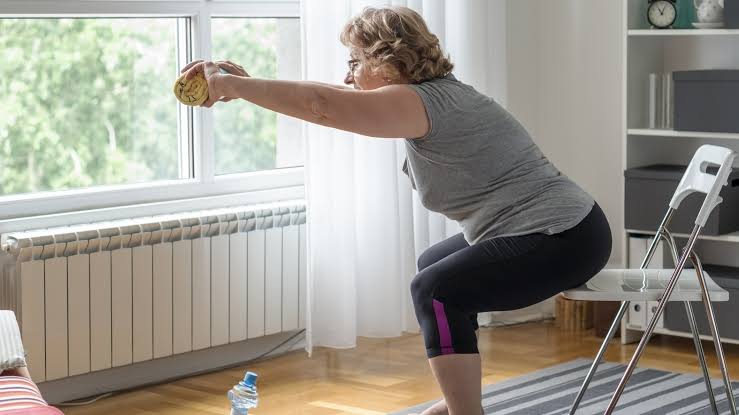
Linda is an illustrative example, not a real reader testimonial. Imagine a 71-year-old grandmother who loves taking her grandkids to the park. One afternoon, she notices that getting up from the grass takes more effort than it used to. She does not need to become a bodybuilder; she wants the everyday strength to keep joining in. Starting with a sturdy chair and a few manageable movements at home may help her practice the skills that matter to her.
Strength training after 60 can be practical and accessible. The goal is not to lift the heaviest weight; it is to move with control, build a routine, and keep doing the things you enjoy. The CDC recommends muscle-strengthening activities at least two days a week, alongside aerobic and balance activities. Start where you are, and allow recovery between sessions.
1. Stand-to-sit chair squats
This movement practices the motion you use to stand up from a chair or get out of a car. Choose a stable chair that will not slide. Stand in front of it with feet comfortably apart, then bend at the hips and knees to lower yourself slowly until you sit. Press through your feet to stand again. Use the armrests or a stable support if needed. Begin with a few comfortable repetitions and build gradually. You do not need to hover above the seat or move quickly.
2. Wall push-ups
Wall push-ups let you work your chest, shoulders, and arms without getting down on the floor. Stand facing a sturdy wall with your hands at about shoulder height. Step back only as far as feels stable; bend your elbows slowly to bring your chest toward the wall, then push away. Keep your body in a comfortable straight line and avoid locking your elbows. Try a few controlled repetitions before increasing the number.
3. Seated bicep curls
These help you practice an everyday lifting motion, such as carrying a light bag. Sit upright in a stable chair with your feet on the floor. Hold a light dumbbell or small water bottle in each hand. With elbows near your sides, slowly bend and straighten your arms without swinging. Choose a weight you can control and stop if the motion hurts.
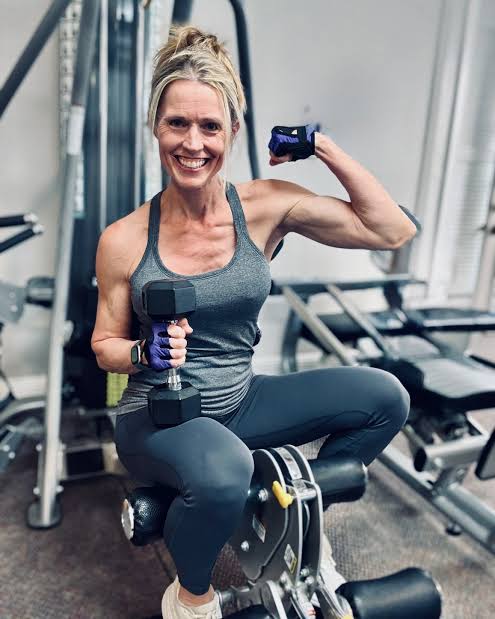
The photo shows a gym exercise; at home, start with lighter weights and a stable chair.
4. Supported single-leg balance stand
This is mainly a balance exercise, not a substitute for resistance training. Stand behind a sturdy counter or chair that cannot tip, with both hands on the support. Lift one foot a little off the ground for a few seconds, then switch sides. Keep the support within reach throughout. If standing on one leg does not feel safe, practice shifting your weight gently from side to side while holding on instead. Never try this near stairs or when you feel dizzy.
5. The farmer's carry
Carrying objects while walking can challenge your grip and trunk muscles. First check that your route is clear of rugs, pets, and other trip hazards. Hold one light, manageable object in each hand, stand tall, and walk a short distance at a comfortable pace. You can start with lighter bags or bottles; there is no need to lift heavy weights. Skip this movement if carrying objects affects your balance, and ask a qualified professional for a safer alternative.
Why strength and balance matter after 60
Muscle strength supports ordinary tasks such as rising from a seat, carrying groceries, and using stairs. Balance practice is another part of staying active. The National Institute on Aging's exercise guidance covers strength and balance as distinct types of activity. No single exercise guarantees that a fall or fracture will be prevented; your starting ability, health, and surroundings all matter.
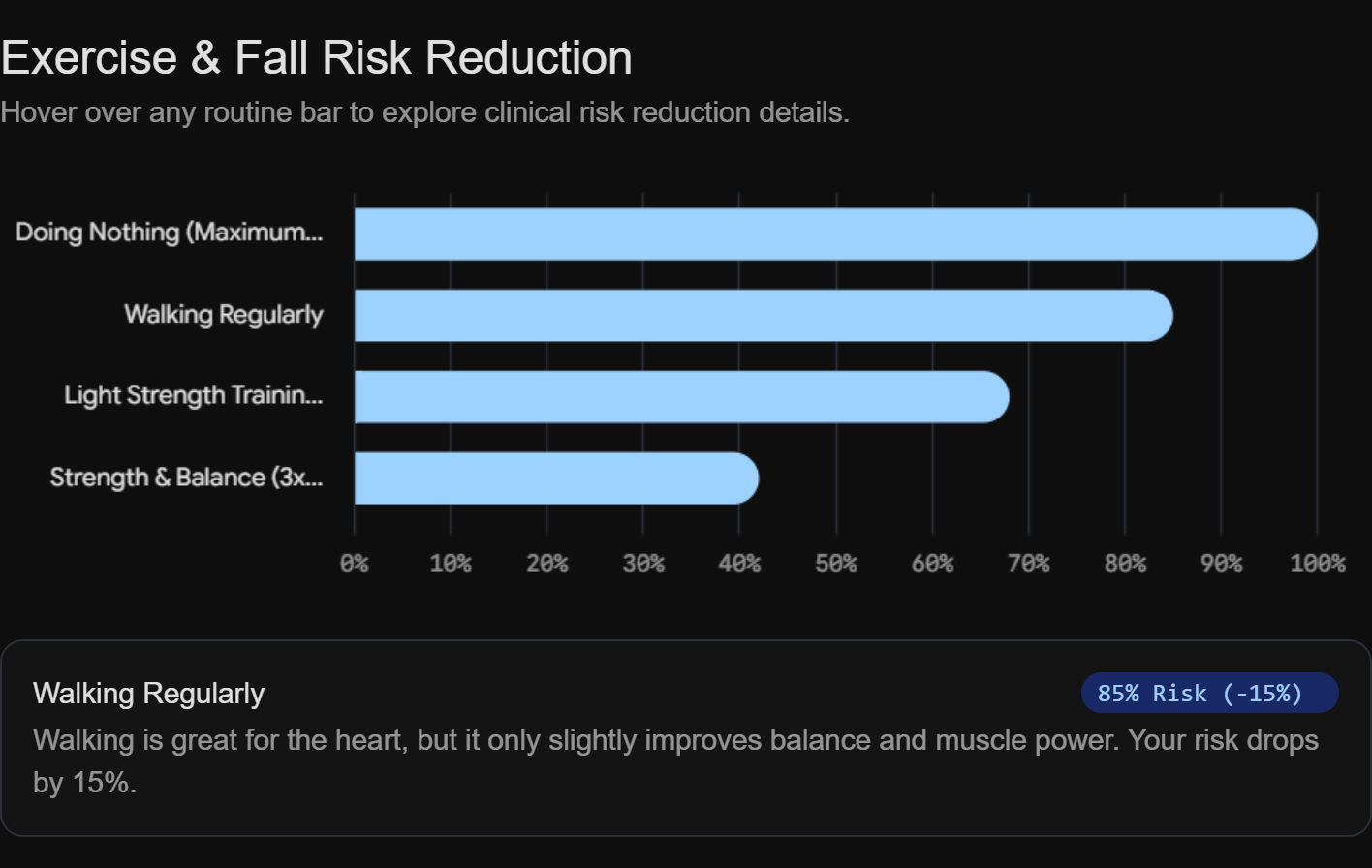
Illustrative chart only. It shows the general idea that combining strength and balance work may lower fall risk more than walking alone; the percentages are not from a specific study and are not a personal risk estimate.
Building a comfortable recovery routine
A little muscle soreness after a new activity can happen, but sharp pain, chest symptoms, or dizziness are reasons to stop and seek medical advice. Rest between strength sessions, stay hydrated according to your clinician's guidance, and eat a varied diet with enough protein. For food ideas, read Top 5 Protein Sources to Help Maintain Muscle After 60. For a broader movement routine, see Walking and Strength Training for Healthy Aging. If you are curious about light-based devices, our at-home red light therapy overview explains what is known and what remains uncertain; a device is not necessary for strength training or recovery.
If you have a history of falls, osteoporosis, heart disease, joint problems, or a recent injury—or if you are unsure which movements are appropriate—ask your healthcare professional or a qualified physical therapist before starting. They can help you adapt these movements to your needs.
Key takeaway
You do not need heavy weights to begin. A stable support, manageable movements, and steady practice can make a strength routine more approachable. Begin with the movements you can do safely today and build up at your own pace.
Sources
Get the Free Healthy Aging Guide
Inside the free guide, you'll find the top protein sources for keeping your muscles strong as you age, simple meal-timing strategies for steady all-day energy, everyday foods that help your body fight inflammation naturally, and the #1 supplement mistake adults over 60 make — all explained in plain language you can put to use this week.
Get the Free Healthy Aging GuideSent straight to your inbox — free, no spam, unsubscribe anytime.
Medical disclaimer: DrAIFIT provides general educational information and is not a medical service. This content does not diagnose, treat, cure, or prevent disease. Speak with a qualified healthcare professional before changing your diet, exercise, supplements, or medications, especially if you have a medical condition or take prescription medication.