Top 5 Expert Approved Ways to Support Your Metabolism After 60
Published: 10/1/2026
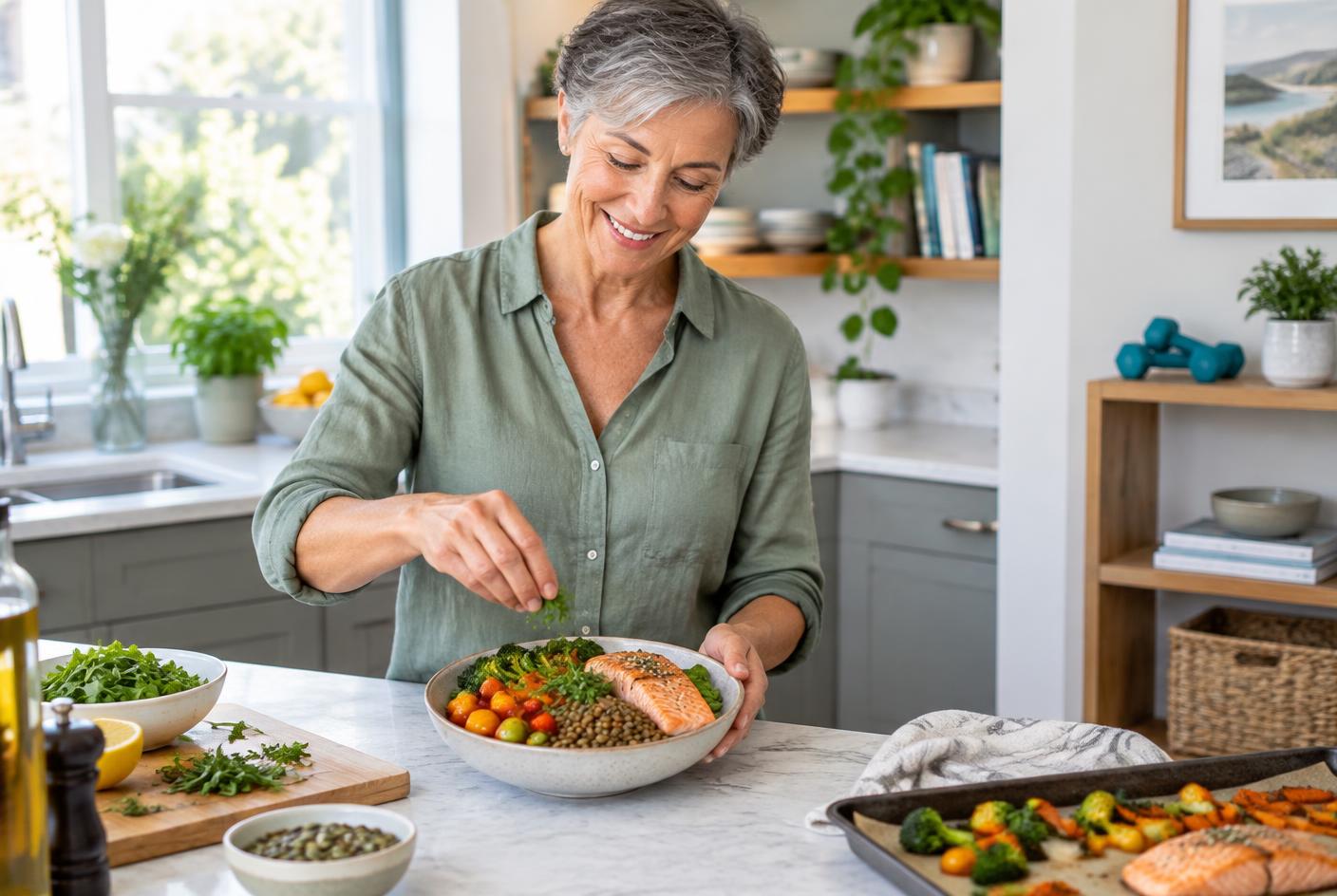
Susan, a 62-year-old retired office manager, used to assume that smaller portions were the answer whenever her energy dipped. But skipping meals left her hungry and tired. For someone in her situation, a more useful question might be: Am I eating enough nourishing food and moving in ways that help me maintain strength?
A “sluggish metabolism” can mean different things. Total energy use depends on body size, muscle mass, movement and other factors; age alone does not determine it. Research suggests that adjusted daily energy expenditure stays relatively stable through much of adulthood and tends to decline later in life. There is no single food or device that reliably “restarts” metabolism. These five habits focus on supporting strength, nourishment and everyday energy instead.
1. Make room for protein at meals
Your body uses energy to digest food, an effect called the thermic effect of food. Protein generally requires more energy to process than fat or carbohydrate, but that difference does not mean eating more protein automatically produces meaningful weight loss. Its clearer value after 60 is helping to maintain muscle alongside appropriate physical activity.
Try building meals around foods you enjoy, such as eggs, yogurt, beans, tofu, fish or poultry. For practical ideas, read Top 5 Protein Sources to Help Maintain Muscle After 60. If you have kidney disease or have been told to limit protein, ask your healthcare professional what amount is right for you before changing your diet.
2. Challenge your muscles safely
Strength work supports the muscles used to rise from a chair, climb steps and carry groceries. It can help preserve function as we age, although adding muscle does not guarantee a large or permanent increase in resting calorie burn.
The CDC's guidance for older adults recommends including muscle-strengthening activity at least two days per week, alongside aerobic and balance activities, when appropriate for your abilities. You might begin with a supported chair stand or light resistance band and build gradually. See our five safe strength-training exercises for adults over 60 for examples. Ask a clinician about a suitable starting point if you have pain, balance problems or a medical condition.
3. Move a little more between workouts
NEAT (non-exercise activity thermogenesis) is the energy used in ordinary movement outside planned exercise: walking around the home, gardening, doing chores or taking the stairs. Rather than treating a workout as the only time you can move, look for comfortable opportunities to interrupt long periods of sitting.
Try a short walk after a meal or stand and stretch during a break. These modest activities can add up over a day, but there is no reliable rule that five minutes each hour burns more than a gym session. Choose movement you can do safely and consistently.
4. Drink enough fluids for your needs
Water supports normal body functions and can help you feel your best. Older adults may not always notice thirst as readily, so keeping a drink handy can be useful. Plain water, other unsweetened drinks and fluid-rich foods can all contribute.
You do not need to drink 16–20 ounces of ice-cold water on waking to “jump-start” metabolism. Warming cold water uses some energy, but there is no good reason to expect a meaningful, lasting metabolic boost from that practice. Drink at a comfortable temperature and follow your clinician's instructions if you have a fluid restriction.
5. Put cellular-energy claims in perspective
Mitochondria help cells turn nutrients into usable energy. Regular movement, adequate food and sleep are sensible foundations for daily energy. You may also see red or near-infrared light devices advertised with claims about ATP or mitochondrial function. Early research is exploring these effects, but it has not established at-home light therapy as a way to speed up whole-body metabolism, treat fatigue or produce weight loss.
If you are curious about devices, read our educational overview of reVive Light Therapy, including questions to ask before buying. Device clearance for a particular use does not mean approval for metabolism claims.
A practical takeaway
You do not need to eat as little as possible or chase a “metabolism hack.” Start with balanced meals, strength and balance work suited to your ability, regular everyday movement and enough fluids for your circumstances. If tiredness, feeling unusually cold or unexplained weight changes persist, see a healthcare professional: these symptoms can have causes that deserve evaluation.
For more food and activity ideas, explore our healthy weight management guide for adults over 60. The Free Healthy Aging Guide signup at the end of this article also covers practical protein choices and other everyday habits.
Sources and further reading
Disclosure: DrAIFIT may earn a commission if you purchase through certain links. This does not increase your cost. Product information and recommendations are provided for general educational purposes.
Get the Free Healthy Aging Guide
Inside the free guide, you'll find the top protein sources for keeping your muscles strong as you age, simple meal-timing strategies for steady all-day energy, everyday foods that help your body fight inflammation naturally, and the #1 supplement mistake adults over 60 make — all explained in plain language you can put to use this week.
Get the Free Healthy Aging GuideSent straight to your inbox — free, no spam, unsubscribe anytime.
Medical disclaimer: DrAIFIT provides general educational information and is not a medical service. This content does not diagnose, treat, cure, or prevent disease. Speak with a qualified healthcare professional before changing your diet, exercise, supplements, or medications, especially if you have a medical condition or take prescription medication.